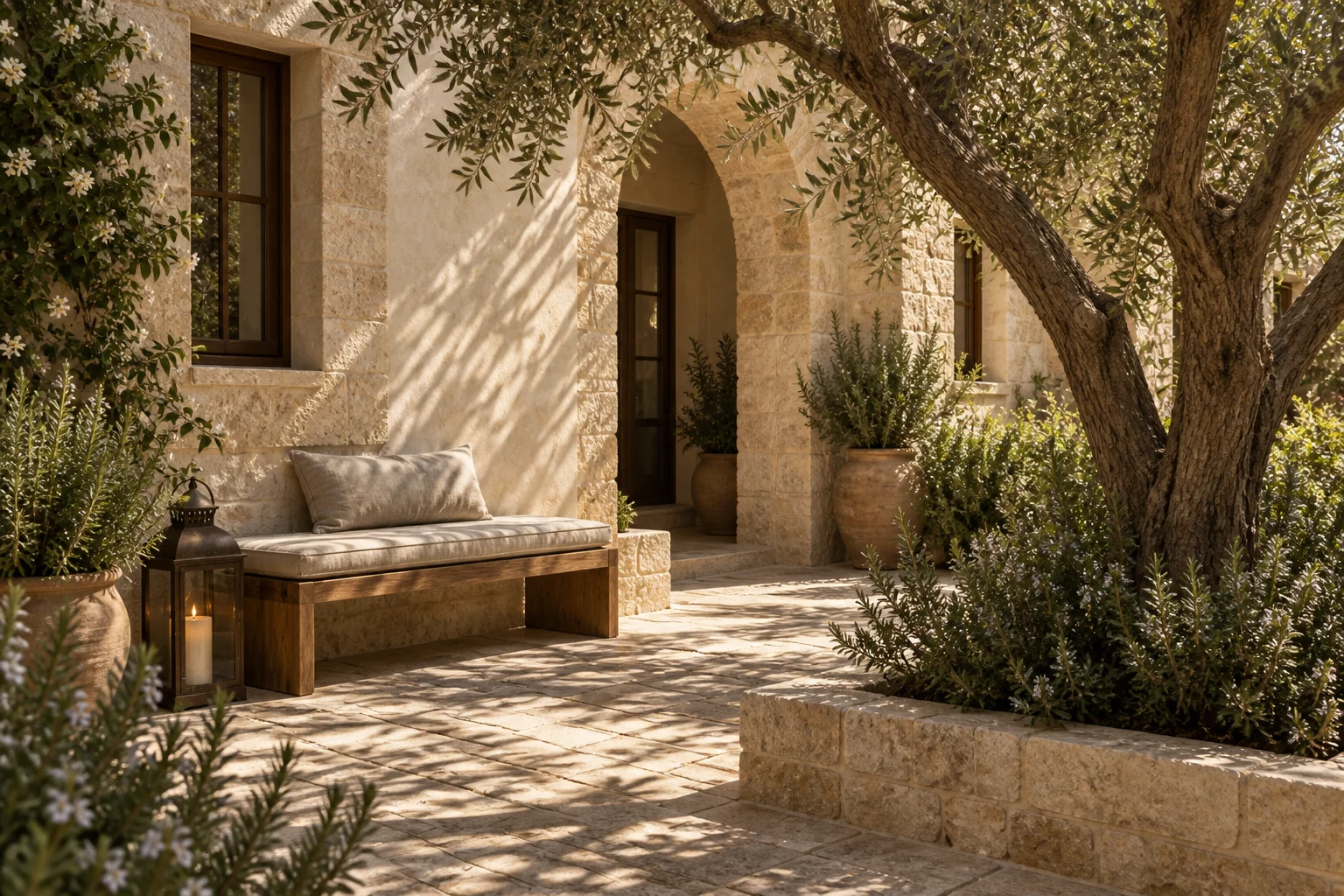
Before we imagined a single piece of furniture, we imagined the shadows. A deep window reveal at midday. The moving pattern of olive leaves on a courtyard wall. A rectangle of evening sun crossing the floor of a room. Light is the material that costs nothing and changes everything.
Aurel House was conceived from the outside in. Its two-storey form gathers around a courtyard, a sheltered middle where the coastal wind softens and the pace drops. Pale stone holds a little of the day’s warmth. The arches are there to make passages feel generous, not grand.
Inside, the palette stays close to what is outside: the chalk of limestone, the brown of olive bark, the deep green of water in shade. Walnut gives the hand somewhere warm to land. Linen moves when a window opens. Bronze is allowed to look like it has been touched.
Enough, and no more
A small house asks for careful choices. A chair should be comfortable enough to finish a book in. A bedside light should fall on a page, not in someone else’s eyes. A shelf should hold a glass of water and a few things brought from home. These are quiet decisions, but they are the ones that turn a room into a place to stay.
A changing room
The rooms are designed to look different at nine in the morning and six in the evening. We would rather let daylight do that work than fill every surface. This is a fictional house, but the design question behind it is a real one: how little does a room need, if everything in it has been considered?